
BlogProtection & durability
How long does graffiti on a facade last?
- Reading time
- 7 min
- Published
- Founder and graffiti artist
- Marcus Dörr
In short
There's no fixed guaranteed lifespan, because sun, weather and color choices all play a part. As a rough guide, we say about five years, or ten with suitable sealing. We have walls that are 15 to 20 years old. The two-coat anti-graffiti protection costs €35 per m² excl. VAT and makes tags easier to remove.
A mural isn't wallpaper. It stands outside in sun, rain and frost. How long it looks good depends on a few things. Most of them can be settled before the first spray.
How long does a mural last outdoors?
There's no fixed guaranteed lifespan. We do have rough benchmarks, though. As a guide, we say about five years, or ten with suitable sealing.
We have murals on walls that are 15 to 20 years old. They fade a little. It's hardly noticeable, because nobody holds the original up next to them. How long your mural lasts depends on sun, environmental factors and the colors you choose.
What shortens its lifespan?
First comes the substrate. A crumbling or damp wall will make any piece peel after two to three years.
That's why we don't paint on damp walls. The cause has to be fixed first. Next comes the wall's location. A weather side exposed to driving rain ages much faster than a sheltered courtyard facade. Add to that frost, road salt at the base of the wall and climbing plants such as ivy.
One factor is often underestimated. A lot of damage comes from a pressure washer that the building maintenance company uses regularly. We talk about this at handover.
Which colors fade fastest?
Red, magenta and neon shades lose their strength fastest on south-facing walls. All colors change over time. The only question is how fast.
We use lightfast pigments. For spray cans that means Montana Gold, for facade paint Brillux. If your motif absolutely needs bright red on a sunny wall, we'll tell you upfront. Then we plan a later touch-up from the start.
What does sealing do?
Sealing protects the mural and makes tags easier to remove. We're happy to apply it, with a different goal depending on the location.
- UV protection. In strong sun, it protects the colors.
- Anti-graffiti coating. We recommend it in big cities, in busy locations, on publicly accessible surfaces and on substations. Unwanted paint then comes off much more easily.
Our standard is Graffiti Guard. We apply it in two coats and charge €35 per m² excl. VAT. For 100 square meters, that's €3,500. We deliver a matte finish as standard. On large facades in sunlight, glossy surfaces reflect so strongly that you can barely make out the motif. Find out more on our graffiti protection page.
Sacrificial coating or permanent sealing: which is better?
For artworks, we recommend permanent sealing. With a sacrificial coating, the paint layer takes more of a beating with every cleaning.
The sacrificial coating is a wax. During cleaning with hot water, it comes off together with the unwanted paint. Afterward, it has to be reapplied. Permanent sealing stays on the wall and withstands several cleanings. In return, it can't be removed later without leaving residue. Which system fits also depends on the substrate.
When does a wall not need sealing?
A wall doesn't need sealing if nobody can reach it, there's no risk of tags, or the substrate can't tolerate the protective film.
A tall gable wall is usually hard for taggers to reach. There, the money is better spent on more motif area. Interiors almost never need anti-graffiti sealing. On surfaces people touch, such as hallways, stairwells or cafeterias, a matte clear coat is enough. We also keep our hands off damp wall bases, where the film would make the problem worse.
You can also add sealing later, as long as the paint layer is intact. It costs less to do it in the same visit, because otherwise travel, cleaning and possibly an aerial platform are needed a second time.
Does a painted wall keep taggers away?
Generally, yes. In the scene, painted surfaces are largely respected, because people can see the work behind them. Bare gray walls are the real target.
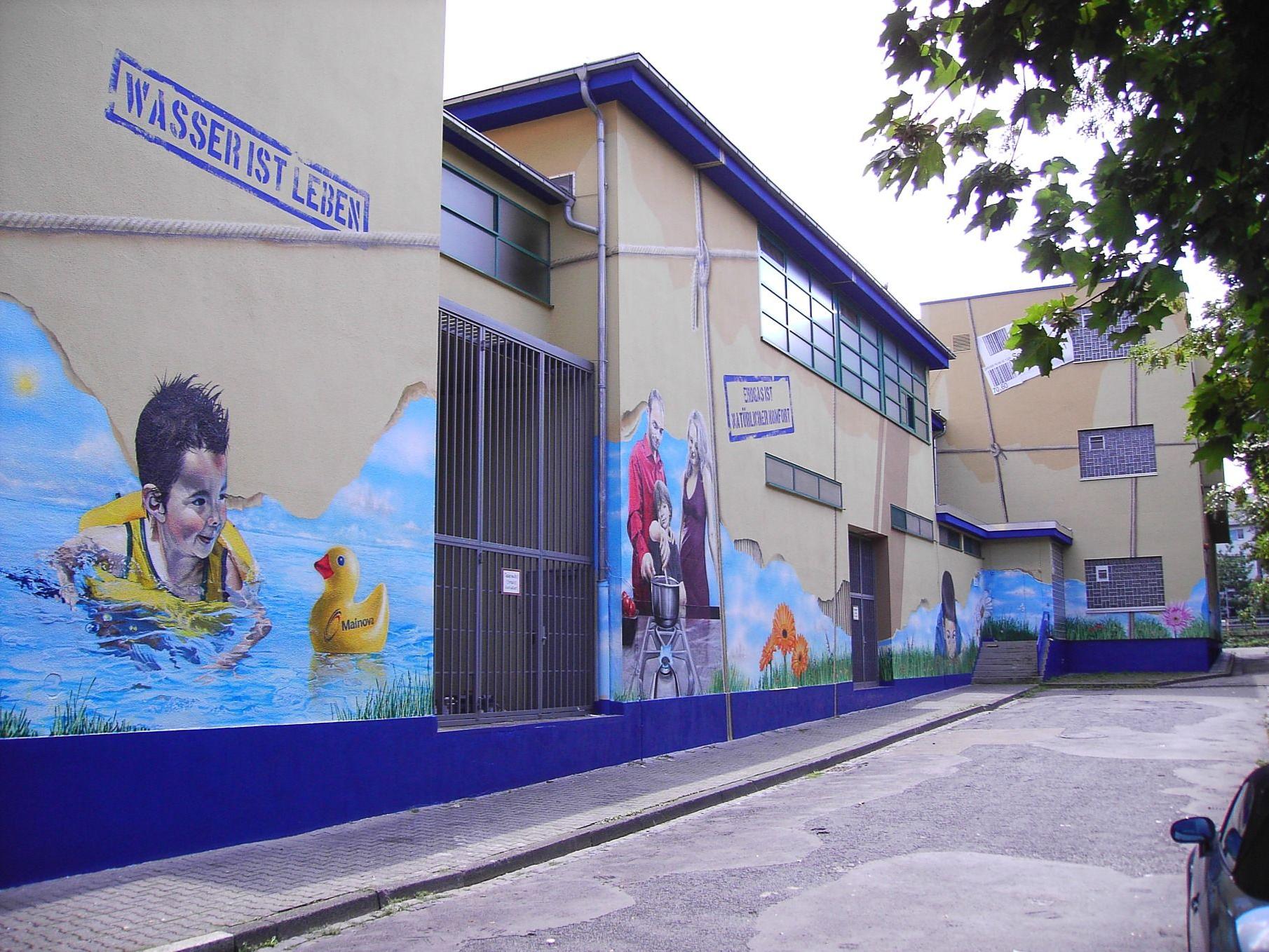
Still, there's no guarantee. The unwritten code applies to graffiti writers, not to drunks with marker pens. That's why we seal surfaces people can reach. In 2006, we painted the facade of a heating plant in Frankfurt for the energy supplier Mainova, which had been tagged again and again. At the end, we sealed the mural.
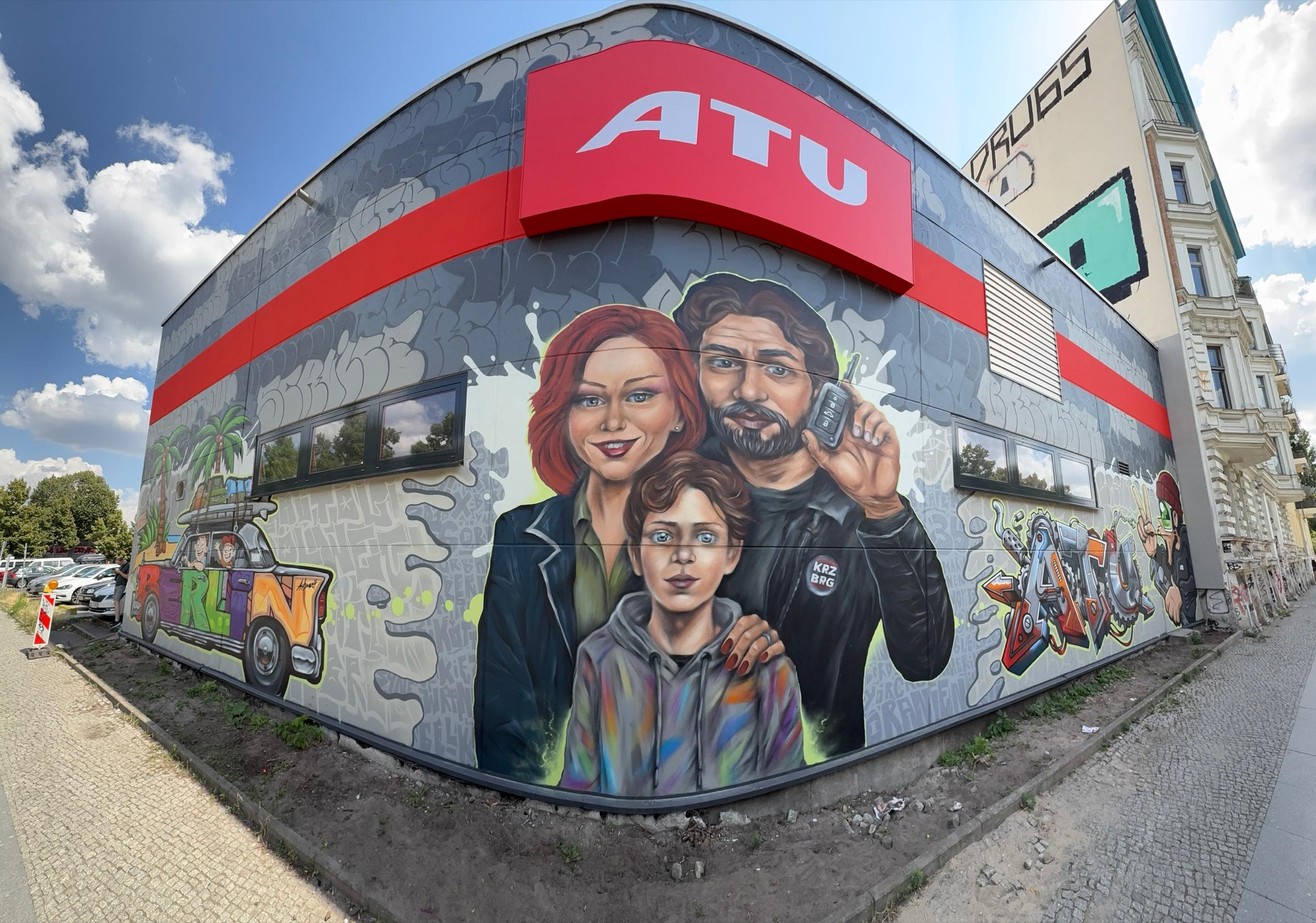
In Berlin-Kreuzberg, the facade of an ATU auto repair shop was the most heavily tagged on the street. Cleaning wouldn't have helped there. Within a few weeks, it would have been covered again. Today it carries over 510 square meters of graffiti commissioned by ATU.
For Deutsche Bahn in Munich, we also painted 26 buildings and sealed every piece.
“The sealed artworks aren't just beautiful, they also protect against vandalism.” Hanno Latko, DB project manager, 2nd Trunk Line, Munich
How do I care for a finished mural?
Normally, you don't have to do anything. Rain washes off dust. Take a look once a year.
If the mural does get dirty, lukewarm water, a mild cleaner and a soft sponge are enough. Work from top to bottom and rinse with clean water. For large surfaces, a pressure washer at no more than 80 to 100 bar and at least 40 centimeters away is fine. Always keep the jet moving.
Never use:
- Solvents, acetone or lacquer thinner
- Hydrochloric acid and acidic facade cleaners
- Off-the-shelf graffiti removers, because they can't tell your mural from a tag
- Wire brushes and scouring cream
If in doubt, give us a call first.
What should you do if someone tags the mural?
Get in touch with us within 24 to 48 hours. Fresh paint comes off much more easily than dried paint.
Photograph the damage before anyone rubs at it. Don't try anything yourself. Most damage to murals isn't caused by the tagger, but by the well-meant cleaning attempt afterward. Without sealing, the unwanted paint sits directly on your mural. Then painting over and respraying the affected spot is often the better way.
Also file a police report. Property damage is a criminal offense, and a report is usually required for your building insurance to pay. Check your policy.
Can a mural be touched up later?
Yes. We document every project with color codes, manufacturer details and batch numbers. That way, we can match the shade even years later.
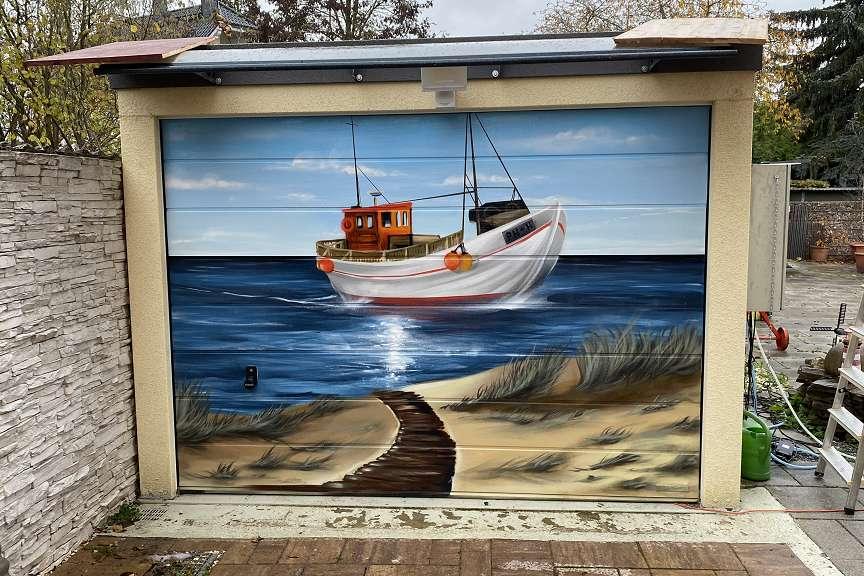
As a rule, the same artist does the touch-up. We work with soft transitions instead of hard edges, because an aged wall differs from the fresh color anyway. What care and protection cost in a quote is covered in the article How much does a graffiti commission cost?. How to protect a garage door is explained in Garage door mural: hire an artist or paint it yourself?. And whether you can paint over a mural later is answered in Do I need a permit for a mural?.
Frequently asked questions about durability and protection
Does a mural need to be renewed at some point?
At some point, the colors lose their brilliance. As a rough guide, we say about five years, or ten with suitable sealing. We have murals that are 15 to 20 years old. Many clients have theirs refreshed after about ten years.
Can I use a pressure washer on the mural?
Yes, but carefully. No more than 80 to 100 bar, at least 40 centimeters away, and always keep the jet moving. For most dirt, lukewarm water, a mild cleaner and a soft sponge are enough.
Do we even need sealing?
We recommend it for reachable surfaces in busy locations. On a tall gable wall or indoors, you usually don't need it. In strong sun, UV protection can make sense.
What do we do in case of vandalism?
Photograph the damage and get in touch within 24 to 48 hours. Don't try anything yourself and don't use graffiti removers. File a police report, as insurers usually require one.
Can sealing be added later?
Yes, as long as the paint layer is intact. The surface is cleaned, has to dry thoroughly and then gets the protection. It costs less to do it in the same visit, because travel and setup only happen once.